
WebsiteDevelopmentExpert
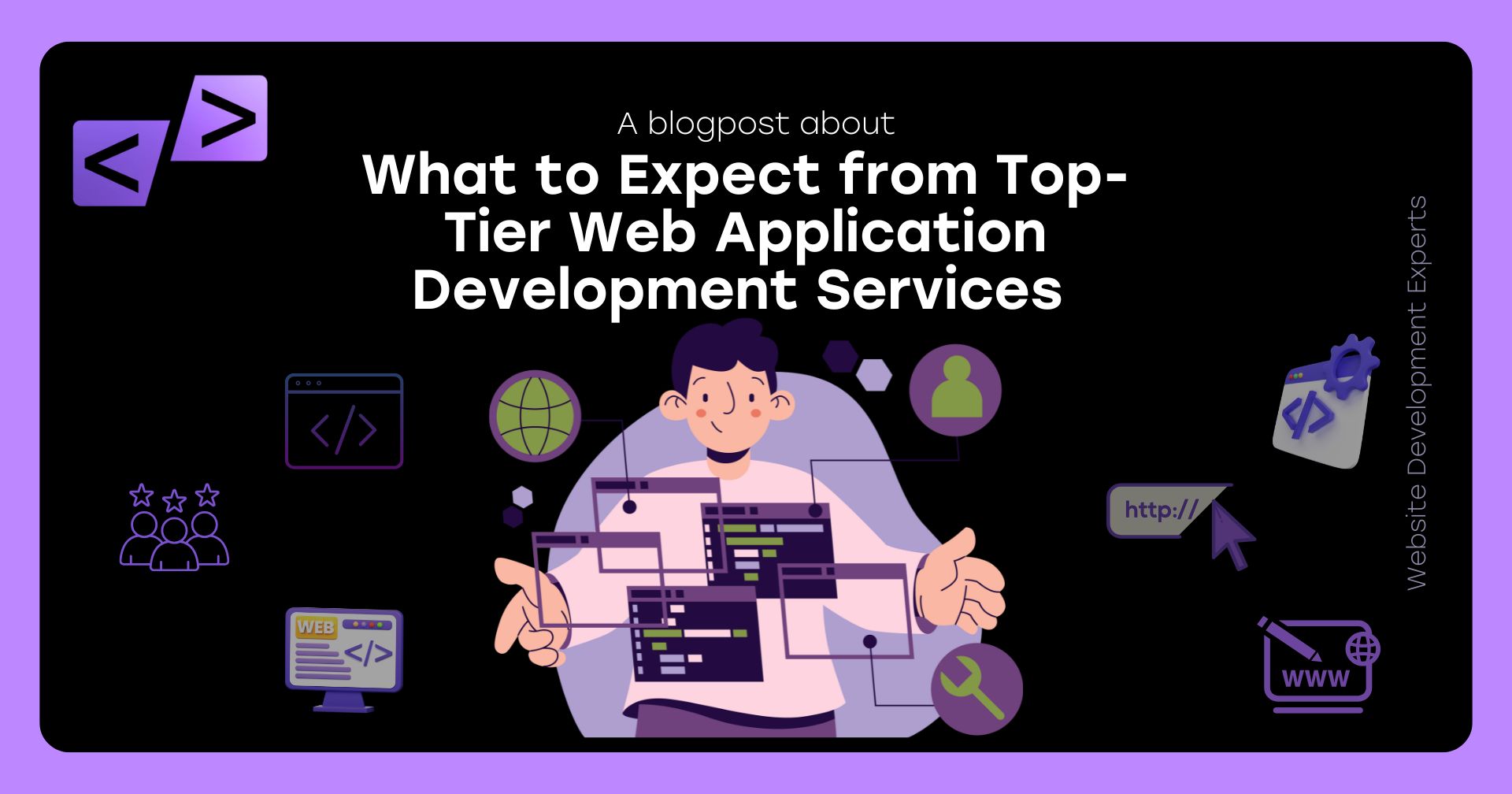
What to Expect from Top-Tier Web Application Development Services


WebsiteDevelopmentExpert
1/22/2025
Introduction: Why Top-Tier Web Application Development Services Matter
In 2025, the web development services market is valued at an impressive USD 80.6 billion, with a projected 9.3% CAGR through 2030. These numbers clearly demonstrate the increasing importance of digital transformation for businesses across industries. Companies can no longer rely solely on traditional websites or legacy systems—they need top-tier web application development services to streamline operations, improve customer experiences, and maintain a competitive edge.
The evolution of web applications is remarkable. From simple web pages to progressive web apps (PWAs), modern businesses require solutions that are fast, responsive, and scalable. Enterprises are increasingly adopting custom web application development services to address unique challenges while leveraging AI-driven web application development to accelerate delivery and optimize performance.
Additionally, as digital transformation accelerates, ROI-focused web application services are becoming a priority for decision-makers. Companies now measure web development not just by functionality, but by how it impacts revenue, user engagement, and operational efficiency. The market data confirms this: outsourced web application development represents a USD 1.6 billion slice of the total market, expected to grow to USD 3.0 billion by 2035, indicating strong demand for specialized, high-quality services.
Key Features of Top-Tier Web App Development Services
Custom Functionality Tailored to Your Business
Top-tier developers excel at delivering enterprise-grade web application development. They don’t just build apps; they craft solutions tailored to your business strategy. Whether it's an outsourced web application development project for fast-growing SMEs, which currently show a CAGR of 11.2%, or for large enterprises accounting for 57% of outsourced spend, the focus is on solving real business problems.
ROI-focused web application services are designed to reduce operational bottlenecks, automate workflows, and provide actionable insights. For example, enterprise portals can integrate microservices web application development, connecting multiple business functions into a cohesive platform. E-commerce platforms benefit from React Angular Vue web development for dynamic, responsive interfaces, while internal dashboards can be built on Node.js web application services for speed and reliability.
Customization also extends to compliance and security. Large organizations require compliance-ready web applications (SOC 2, ISO 27001) to protect sensitive data and meet regulatory mandates. Premium secure web application development firm offerings ensure data integrity while providing tailored analytics, reporting, and real-time monitoring.
Responsive and Mobile-Friendly Design
Mobile-first strategies are no longer optional. With PWAs growing at a 14% CAGR, top-tier developers now specialize in progressive web app development services that work seamlessly across all devices. Mobile and tablet users expect fast, intuitive experiences; apps that fail to deliver can hurt retention and conversion rates.
Premium scalable web app development agency services focus on responsive design, ensuring every interface adapts to screen size and orientation. They employ React Angular Vue web development to create fluid layouts, interactive elements, and smooth transitions. Mobile optimization goes beyond design—it includes load speed, touch interactions, and offline capabilities.
In addition, top-tier vendors often integrate serverless web app architecture for better performance on mobile devices. This reduces latency and ensures a smooth experience even under heavy traffic. These features are essential for modern enterprises that want 99% uptime SLA web development, ensuring accessibility at all times.
Scalability and Performance Optimization
Scalability is a critical differentiator for high-end web application development companies. Businesses today experience rapid growth in users, transactions, and data volume. Top-tier developers implement cloud-native web application development and microservices web application development to allow apps to scale efficiently.
Currently, 1.6 million monthly outsourced development hours are deployed worldwide, expected to reach 2.8–3.0 million hours by 2035. Managing this growth requires careful architecture planning, performance optimization, and robust backend infrastructure. Enterprises leverage Node.js web application services for fast data processing and integrate caching, load balancing, and database optimization to reduce latency.
Performance optimization also includes front-end improvements using React Angular Vue web development, ensuring pages render quickly and smoothly. Vendors track key performance indicators such as Time to Interactive (TTI) and First Contentful Paint (FCP), ensuring apps remain responsive under peak loads.
Secure and Compliance-Ready Applications
Security is non-negotiable in enterprise-grade web application development. Top-tier services now include compliance-ready web applications with SOC 2 and ISO 27001 certifications as standard. Security features such as two-factor authentication, encrypted data storage, and secure API integrations protect sensitive information.
Cloud-native architectures enhance security by isolating workloads and providing automated patching. With increasing cyber threats, high-end web application development companies must implement 99% uptime SLA web development and real-time monitoring for proactive threat mitigation.
For enterprise clients, compliance extends beyond security. GDPR, HIPAA, and industry-specific mandates require careful adherence. By choosing secure web application development firms, companies ensure legal compliance while maintaining customer trust.
The Development Process Explained
Requirement Gathering and Planning
The first step in top-tier web development is understanding the client’s objectives. Vendors conduct workshops, stakeholder interviews, and competitor analyses to define a roadmap. Custom web application development services prioritize ROI, aligning business goals with technical feasibility.
Large enterprises often require AI-driven web application development to handle complex workflows, while SMEs benefit from scalable web app development agency practices that maximize efficiency. Requirement gathering also considers security, compliance, and future scalability.
UI/UX Design and Prototyping
UI/UX design is more than aesthetics; it’s about user engagement and conversion. Developers use React Angular Vue web development to create interactive wireframes and prototypes for progressive web app development services.
Top-tier vendors conduct usability testing to refine workflows, minimize friction, and enhance accessibility. Early prototyping ensures that cost-efficient web application development can avoid expensive revisions post-development. Visual consistency, intuitive navigation, and responsive layouts are critical for both enterprise and SME projects.
Front-End and Back-End Development
Front-End Technologies and Frameworks
The front end defines the user experience. Top-tier developers employ React, Angular, and Vue frameworks to deliver fast, interactive, and responsive interfaces. For mobile and web users, serverless web app architecture and PWA features ensure smooth, reliable interactions.
Back-End Technologies and Frameworks
Back-end systems power the application. Using Node.js web application services, developers create scalable, secure, and efficient infrastructures. Modern architecture includes microservices web application development and headless CMS integration services, allowing apps to grow seamlessly and integrate with multiple platforms.
Quality Assurance and Testing
Quality assurance is continuous and automated in high-end web application development companies. AI-driven testing tools provide 15-20% productivity gains, detecting functional, performance, and security issues faster than traditional methods.
Testing spans cross-browser compatibility, load stress tests, and penetration testing to maintain 99% uptime SLA web development. Continuous integration and automated deployment pipelines ensure high-quality releases for enterprise-grade web application development.
Deployment and Post-Launch Support
Deployment is strategic and often cloud-based. Vendors use cloud-native web application development and serverless architectures to simplify scaling and reduce costs. Post-launch, web app maintenance & support plans include monitoring, updates, and feature enhancements, keeping apps competitive.
Enterprises expect real-time issue resolution and continuous performance tuning. Ongoing support also ensures compliance-ready web applications (SOC 2, ISO 27001) remain up to date with evolving regulations.
Benefits of Hiring Professional Web App Developers
Time and Cost Efficiency
Top-tier vendors leverage AI, PWAs, and cloud-native solutions to reduce time-to-market. For example, progressive web app development services can launch in 6–10 weeks, versus 4–6 months for traditional native apps.
Outsourcing rates reflect market benchmarks: USD 60–120/hour in North America, USD 25–50/hour in India/Eastern Europe, providing cost-efficient web application development without sacrificing quality.
Access to Advanced Tools and Technologies
Professional developers integrate serverless web app architecture, headless CMS integration services, and AI-driven web application development into standard workflows. This reduces costs, enhances scalability, and improves UX. Tools and frameworks like React Angular Vue web development and Node.js web application services remain industry defaults, ensuring longevity and maintainability.
Ongoing Maintenance and Support
Maintenance is continuous. Vendors provide web app maintenance & support plans, including security patches, feature updates, and cloud optimization. Enterprises benefit from 99% uptime SLA web development and proactive monitoring, minimizing downtime and maximizing business continuity.
How to Choose the Right Web Application Development Company
Portfolio and Case Studies
Examine real-world results. Leading firms such as Accenture (USD 64.9B FY24 sales) and Tata Consultancy Services (USD 29.1B) showcase expertise in AI-driven web application development and cloud-native modernization projects. Case studies provide insight into problem-solving, scalability, and ROI delivery.
Client Reviews and Testimonials
Feedback highlights reliability, communication, and adherence to standards. Top-tier vendors meet compliance-ready web applications expectations while maintaining 99% uptime SLA web development.
Transparent Communication and Project Management
Agile methodologies and clear milestone tracking ensure expectations are met. Vendors communicate timelines, risks, and scope changes, providing transparency in outsourced web application development engagements.
Market Trends and 2025 Insights for Buyers
Outsourced Opportunity: The outsourced web development slice is USD 1.6 billion, projected to grow to USD 3.0 billion by 2035, with 1.6 million monthly dev hours in play.
Technical Leadership: PWAs and AI-driven web application development dominate new deployments, while classic web apps remain at 58% revenue share (USD 46.7B).
Regional Growth Leaders: China (8.5% CAGR), India (7.9%), and Germany (7.2%) lead growth, with the USA, UK, and Japan maintaining steady adoption.
Vendor Consolidation: With >USD 40B new spend through 2029, firms scale AI teams, invest in cloud-native web application development, and enhance web app maintenance & support plans.
Buyers can benchmark proposals, set ROI expectations, and negotiate SLAs with confidence using this data.
Conclusion
Choosing top-tier web application development services ensures your business receives custom, scalable, and secure solutions. By leveraging AI-driven development, PWAs, and cloud-native modernization, professional vendors optimize performance, reduce costs, and maintain compliance. With 2025 market insights and metrics, enterprises and SMEs can confidently select best-in-class web app developers that deliver measurable ROI and long-term digital success.
Transform your vision into a digital reality.
Don't just build a website; build a digital experience. We specialize in crafting responsive, secure, and scalable websites that help your brand stand out in a crowded marketplace.
Start Your ProjectFrequently Asked Questions (FAQs) about What to Expect from Top-Tier Web Application Development Services
Top-tier web application development services focus on delivering custom, scalable, and secure solutions aligned with business goals. These services go beyond basic development by combining enterprise-grade architecture, AI-driven web application development, and ROI-focused strategies to improve performance, user experience, and long-term value.
Top-tier web application development services improve ROI by automating workflows, reducing operational bottlenecks, and optimizing user journeys. By aligning custom web application development with measurable business outcomes, these services ensure that functionality directly contributes to revenue growth, efficiency, and customer engagement.
Scalability is critical in top-tier web application development services because businesses often experience rapid growth in users, data, and transactions. By using cloud-native web application development and microservices architecture, top-tier providers ensure applications can scale smoothly without performance degradation.
Top-tier web application development services commonly use modern frameworks and tools such as React, Angular, Vue, Node.js, serverless web app architecture, and progressive web app development services. These technologies enable faster development, better performance, and long-term maintainability.
Security and compliance are built into top-tier web application development services through compliance-ready web applications, encrypted data handling, secure APIs, and certifications like SOC 2 and ISO 27001. These measures help protect sensitive data while meeting regulatory and industry requirements.
When choosing top-tier web application development services, businesses should evaluate portfolios, case studies, client reviews, and communication practices. A reliable provider demonstrates expertise in AI-driven web application development, offers transparent project management, and delivers solutions with clear ROI and long-term support.

