
WebsiteDevelopmentExpert
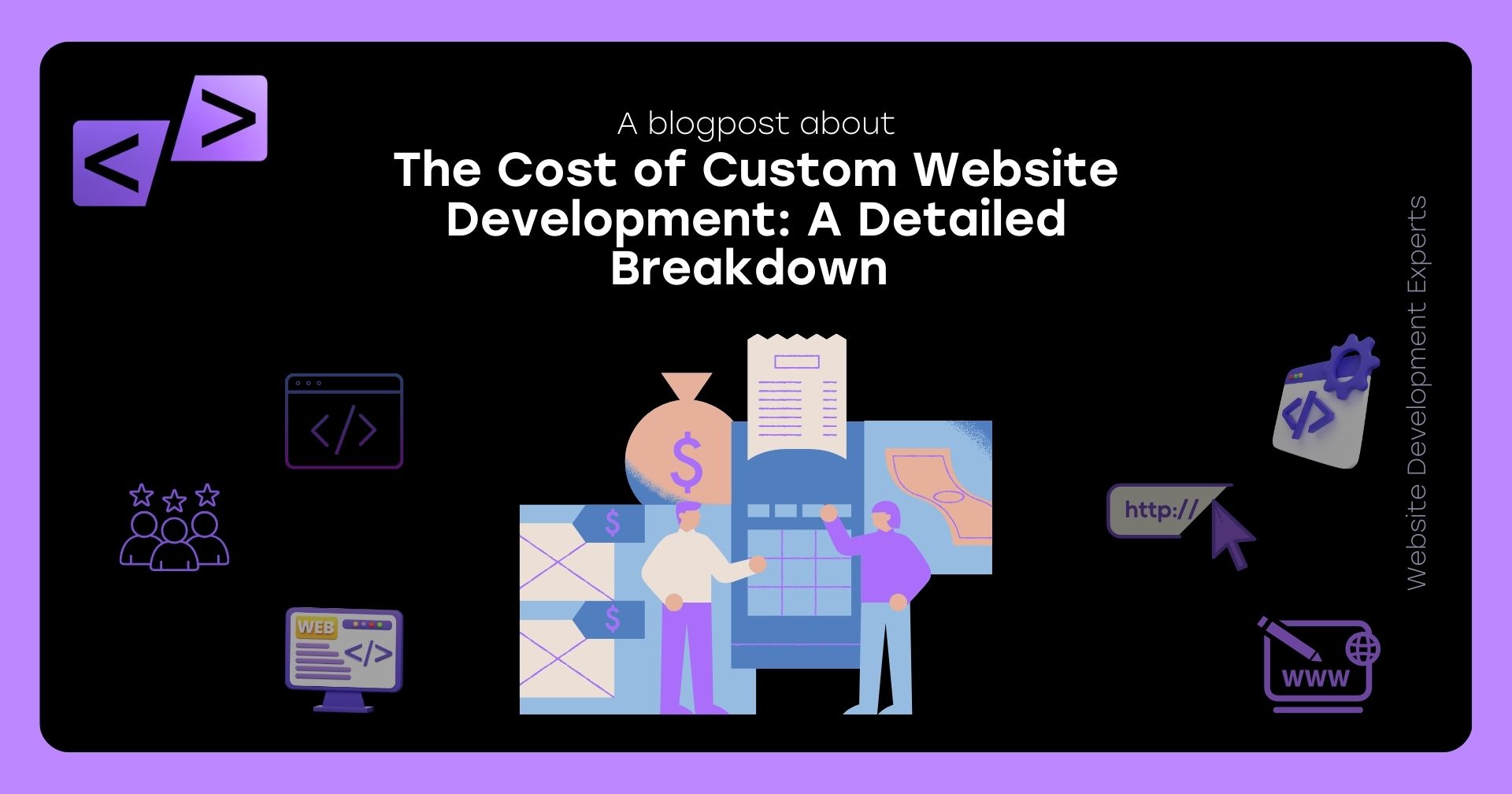
The Cost of Custom Website Development: A Detailed Breakdown


WebsiteDevelopmentExpert
3/6/2026
Introduction to Custom Website Development
In an era where digital presence defines business success, custom website development has evolved into a strategic investment rather than a mere technical requirement. Organizations across industries—from startups to multinational enterprises—are increasingly adopting tailor-made website solutions to create differentiated digital experiences that align with their brand, operations, and growth objectives.
Unlike pre-built platforms, custom development focuses on building a made-to-order web platform that integrates seamlessly with business processes. It supports scalability, enhances performance, and ensures complete control over functionality. As digital ecosystems become more complex, companies are prioritizing enterprise web solutions that can adapt to evolving customer expectations and technological advancements.
What is Custom Website Development?
At its core, custom website development refers to the process of designing and building a website from scratch using hand-coded website architecture. This approach emphasizes uniqueness, flexibility, and performance optimization. Unlike template-based systems, custom builds are developed with a deep understanding of business requirements, user behavior, and long-term scalability.
A bespoke web design incorporates elements such as custom UI/UX design, original graphics, and proprietary website architecture. It often involves advanced technologies like custom API development, database schema design, and headless CMS development.
Moreover, custom websites enable businesses to implement specialized functionalities, such as:
- Customer portals and dashboards
- SaaS platforms and internal tools
- Advanced analytics integrations
- AI-driven personalization
This level of customization ensures that the website becomes a digital asset rather than just an online presence.
Custom Website Development vs Template Solutions
The debate around custom website development vs template solutions is central to modern web strategy. Templates—offered by platforms like website builders—provide quick deployment and lower upfront costs. However, they often lack flexibility, scalability, and performance optimization.
In contrast, custom development delivers:
- Full design freedom with no layout limitations
- Enhanced performance through optimized code
- Advanced SEO capabilities with clean architecture
- Scalability for future integrations and growth
While templates may suit small, short-term projects, businesses aiming for long-term digital transformation benefit significantly from custom builds. Over time, the total cost of ownership (TCO) of custom websites often becomes more favorable due to reduced limitations and higher efficiency.
Why Businesses Choose Custom Website Development
Benefits of Bespoke Web Design
Choosing a boutique website agency or opting for artisan web development allows businesses to create highly personalized digital experiences. A custom website is not just visually appealing—it is strategically designed to guide users, improve engagement, and drive conversions.
Key benefits include:
- Brand differentiation: Unique layouts, typography, and visual identity
- Enhanced user experience: Tailored navigation and intuitive interfaces
- Scalability: Ability to expand features without restructuring the system
- Performance optimization: Faster load times and better responsiveness
Additionally, custom development enables responsive web design and accessible web development, ensuring compliance with global standards such as WCAG 2.1.
ROI and Business Impact
One of the most compelling reasons businesses invest in custom development is the measurable impact on performance metrics. A well-designed custom website directly influences:
- Conversion Rate Optimization (CRO): Improved user journeys lead to higher conversions
- Customer Acquisition Cost (CAC): Efficient funnels reduce marketing expenses
- Lifetime Value (LTV): Enhanced user experience increases retention
Furthermore, custom websites provide better integration with analytics tools, enabling data-driven decision-making. Over time, the return on investment (ROI) justifies the initial cost, especially for businesses operating in competitive markets.
Key Factors Affecting Custom Website Development Cost
Project Scope and Complexity
The scope of a project is one of the most significant cost drivers. A simple informational website differs vastly from a custom web application development project or a custom SaaS development platform.
Complexity increases with:
- Multi-user systems
- Third-party integrations
- Real-time data processing
- Advanced security requirements
The more features and integrations required, the higher the development cost and timeline.
Design Requirements (Custom UI/UX Design)
Design plays a critical role in determining both cost and effectiveness. High-quality custom UI/UX design involves:
- User research and persona development
- Wireframing and prototyping
- Visual design and branding integration
- Micro-interactions and motion design
These elements ensure that the website is not only visually appealing but also functionally efficient.
Technology Stack Selection
The choice of technology stack significantly impacts cost, scalability, and performance. Popular options include:
- Custom React website development for dynamic interfaces
- Custom Angular development for enterprise applications
- Custom Python web development using frameworks like Django
Each technology comes with its own development costs, learning curves, and maintenance requirements.
Development Team Structure
The structure of the development team also influences pricing. Businesses can choose between:
- Freelancers for smaller projects
- In-house teams for full control
- Agencies for end-to-end solutions
A full-stack custom website development agency typically provides comprehensive services, including design, development, testing, and maintenance.
Detailed Cost Breakdown
Discovery Phase and Planning
The discovery phase lays the foundation for the entire project. It includes:
- Stakeholder interviews
- Market and competitor analysis
- Information architecture and content strategy
This phase ensures clarity and reduces risks such as scope creep while aligning business objectives with technical execution.
Wireframing and Prototyping
Wireframes and prototypes act as blueprints for the final product. They allow stakeholders to visualize the structure and functionality before development begins, ensuring alignment and minimizing revisions.
Front-End Development
Front-end development focuses on creating the user interface using technologies like HTML5/CSS3 and JavaScript frameworks. It ensures:
- Cross-browser compatibility
- Responsive design across devices
- Seamless user interactions
Back-End Development
Back-end development powers the functionality of the website. It includes:
- Server-side logic
- Database management
- API integrations
Technologies such as Node.js, PHP, and .NET are commonly used to ensure scalability and performance.
Testing and QA
Quality assurance is critical for delivering a reliable product. This phase includes:
- Functional testing
- Performance testing
- User Acceptance Testing (UAT)
It ensures that the website meets both technical and business requirements before launch.
Deployment and Launch
Deployment involves moving the website to a live environment. It includes:
- Hosting setup
- Domain configuration
- Final performance optimization
A successful launch requires careful coordination between development, operations, and marketing teams.
Pricing Models in Custom Web Development
Fixed Price Model
This model is suitable for projects with clearly defined requirements. It offers predictable costs but limited flexibility when changes arise.
Time and Materials Model
The time and materials model is ideal for projects with evolving requirements. It allows flexibility but requires ongoing monitoring to manage budgets effectively.
Retainer Model
A retainer model provides ongoing support and development services, making it suitable for long-term projects that require continuous updates and improvements.
Hidden Costs in Custom Website Development
Maintenance and Support
Post-launch maintenance includes updates, bug fixes, and performance optimization. Ignoring maintenance can lead to increased technical debt and higher long-term costs.
Hosting and Infrastructure
Infrastructure costs include cloud hosting, CDN integration, and SSL certificates. These costs vary depending on traffic, scalability needs, and performance expectations.
Security and Compliance
Compliance with regulations such as GDPR and accessibility standards adds to development costs but ensures legal protection and user trust.
Cost by Business Type
Small Business Custom Website
Small businesses typically require cost-effective solutions with essential features and scalability options. These projects focus on branding, lead generation, and basic integrations.
Enterprise Website Development
Enterprise projects involve complex architectures, high security, and large-scale integrations. These solutions often include microservices, advanced APIs, and global infrastructure.
Custom E-commerce Development
E-commerce platforms require advanced features such as payment gateways, inventory systems, and personalized user experiences. Costs vary based on complexity and scale.
Timeline and Cost Relationship
Project timelines directly influence costs. Longer timelines allow for better quality assurance and testing but require more resources. Efficient project management ensures a balance between time, cost, and quality.
Choosing the Right Development Partner
Agency vs Freelancer vs In-House
Each option has its advantages:
- Agencies offer comprehensive services and expertise
- Freelancers provide cost-effective solutions for smaller projects
- In-house teams ensure full control and long-term scalability
Vendor Evaluation Criteria
When selecting a development partner, consider:
- Portfolio and case studies
- Technical expertise and technology stack
- Communication and project management capabilities
- Post-launch support and maintenance services
SEO and Performance Considerations
Technical SEO
Custom websites provide complete control over SEO elements, including URL structures, metadata, and schema markup, enabling better visibility in search engines.
Core Web Vitals Optimization
Performance metrics such as page load speed, interactivity, and visual stability directly impact user experience and search rankings. Optimization is essential for long-term success.
Future Trends in Custom Web Development
The future of custom development is shaped by innovation. Emerging trends include:
- AI-assisted development
- Headless CMS architecture
- Progressive Web Apps (PWAs)
- Serverless and cloud-native solutions
These advancements will continue to redefine how websites are built and experienced.
Conclusion
Custom website development is not merely a technical undertaking—it is a strategic investment in digital growth and competitive advantage. While the costs associated with bespoke development may appear substantial at the outset, the long-term benefits in scalability, flexibility, performance, and return on investment make it a compelling choice for forward-thinking organizations.
Businesses that embrace personalized website solutions, leverage modern technologies, and prioritize user experience are better positioned to thrive in an increasingly digital and competitive marketplace.
Transform your vision into a digital reality.
Don't just build a website; build a digital experience. We specialize in crafting responsive, secure, and scalable websites that help your brand stand out in a crowded marketplace.
Start Your ProjectFrequently Asked Questions (FAQs)
Custom website development includes everything from discovery, planning, and custom UI/UX design to front-end and back-end development, testing, deployment, and post-launch support. It also involves integrations, database setup, and performance optimization to ensure a fully functional, scalable digital solution.
The cost of custom website development in 2025 varies depending on complexity, features, and technology stack. A small business site may cost a few thousand dollars, while enterprise-level or custom web application development projects can range significantly higher due to advanced integrations and scalability requirements.
Custom website development is expensive because it involves bespoke web design, tailored functionality, skilled developers, and extensive testing. Unlike templates, a hand-coded website requires more time, expertise, and resources to ensure scalability, security, and performance.
The timeline for custom website development typically ranges from a few weeks to several months. Simple websites may take 4–8 weeks, while complex platforms like custom SaaS development or e-commerce systems can take several months depending on scope and features.
Yes, custom website development is worth the investment for businesses seeking long-term growth. It improves performance, enhances user experience, and supports scalability, ultimately delivering better ROI through higher conversions and stronger brand positioning.
Choosing a custom website development company involves evaluating their portfolio, technical expertise, communication process, and experience in custom web application development. It’s also important to assess their ability to deliver scalable, secure, and SEO-friendly solutions aligned with your business goals.

